53 degrees on Saturday!
Morning Musings 2.25.26- views from dauber island

‘Wise men speak because they have something to say; Fools because they have to say something.’ – Plato
Trump’s SOTU address was typical partisan theater, like all recent presidents', with the downside being the longest speech ever at 108 minutes. Speech has become more of a campaign item, with made-for-news show/campaign ads, sound bites, and ‘moments’. I suppose it is what it is, but I, for one, would like to be interested in what is said rather than feeling like it is a chore to watch.
Highlight for me was the US Men’s Hockey Team
Trump reiterated his commitment to Tariffs; the questions will continue on the legality of these new statutes, longevity (one only has a 150-day lifespan), and consistency, as Trump again changed tariff rates overnight from 10 to 15%. Analysis shows most of tariff costs have been borne by end users, i.e., U.S. consumers. Will anything change now?
‘Affordability’ came up, despite it not being a strong topic for the current Administration. The issue bedeviled Biden’s term, and it appears to be having the same impact on Trump.
The difficulty is that, even as CPI numbers appear to be moderating, prices are not receding; in other words, there is no dis/deflation. Sentiment remains that the cost of living is high, and ‘kitchen table issues’ are the key variable for any Administration. Tariff impact adds to this issue. Cutting rates helps on some fronts but is definitely a mixed bag.
Given this, and the usual midterm election reversion, current expectation is for the Democrats to win 20-50 seats in the House and possibly gain a few seats in the Senate. All of which means the next 8 months will be one non-stop congressional campaign for both sides
Markets pricing deeper Fed cuts into 2027 as growth concerns mount—10-year yields at 4.05% and inverted SOFR curves signal caution. The chances of a quarter-point cut by June down to 50%, the lowest so far this year.
Global risk-on rotation is gaining momentum: Asia-Pacific equities surged overnight (Nikkei +2.2%, KOSPI +1.9%), European miners hit 18-year highs on China restocking hopes, and US futures are modestly higher, though tech’s relief rally remains fragile after AI-driven volatility.
Commodities are flashing mixed signals—copper rallying toward $14,000 on tariff relief optimism and Chinese demand, while gold holds above $5,000 amid geopolitical hedging and silver spikes above $90. The dollar’s weakness (down 0.2% vs G-10) and narrowing credit spreads suggest investors are cautiously re-risking, but today’s $70 billion 5-year Treasury auction and ongoing earnings reports (Lowe’s beat, Aspen Aerogels miss) will test whether this momentum can sustain through midday volatility.
The last 24 hours have seen heightened tensions in the Middle East, particularly around US-Iran relations, amid ongoing negotiations and military posturing.
President Trump warned that a war with Iran could be “easily won” if diplomacy fails, as US envoys push for a deal in Geneva.
The US has evacuated diplomats from Lebanon due to fears of escalation, while reports indicate preparations for potential limited strikes if talks collapse.
Indian Prime Minister Narendra Modi will visit Israel on February 25-26, marking his first trip since 2017 and potentially a significant moment for India-Israel trade relations. His presence in Israel is certainly a barrier to kinetic activity in the area, as Iranian retaliation would most likely include attacks on Israel. He leaves tomorrow.
Iranian crude loadings surged to nearly 27 million barrels last week, or about 3.78 million barrels per day—almost three times the recent weekly average.
Israel remains on high alert, conducting strikes on Hezbollah targets in Lebanon in anticipation of Iranian retaliation.
This builds on yesterday’s developments, where anonymous texts referencing Trump circulated among Iranian protesters, signaling possible US influence in internal unrest.
Russia-Ukraine conflict, marking four years since the invasion, Russian forces continue heavy losses—estimated at 38,000 troops per month—while Putin proposes a deal requiring Ukraine to cede additional territories in Donetsk. Ukraine conducted a drone strike on a Russian Black Sea port ahead of US-led peace talks, highlighting ongoing military pressure despite stalled frontlines.
A partial DHS shutdown enters its 11th day over funding disputes tied to immigration reforms
Pentagon plans to spend $153 billion in new military funds face scrutiny, amid accusations of creating a slush fund.
Margin contraction is a broad challenge for the consumer discretionary sector, driven by inflation-led increases in input costs that have raised production and operating expenses. Rising commodity prices are sustaining cost pressures in some sectors, leading companies to implement price hikes to offset these increases. Pricing remains stable under long-term agreements but under pressure outside contracts, while foreign exchange remains a meaningful drag.
Technology shares led broad gains in stocks after Anthropic’s “Enterprise Agents” webinar landed better than feared, paving the way for a relief bounce
Shares of power producers rose as traders continued to seek out a defensive sector poised to benefit from the artificial-intelligence boom, with the SPDR Select Sector Utilities ETF up 1% and more than 9% year-to-date. (19)
Federal Reserve officials struck a hawkish tone Tuesday, with the underlying message that the inflation mandate is more pressing, potentially helping to remove rate cut bets and back up yields across the curve.
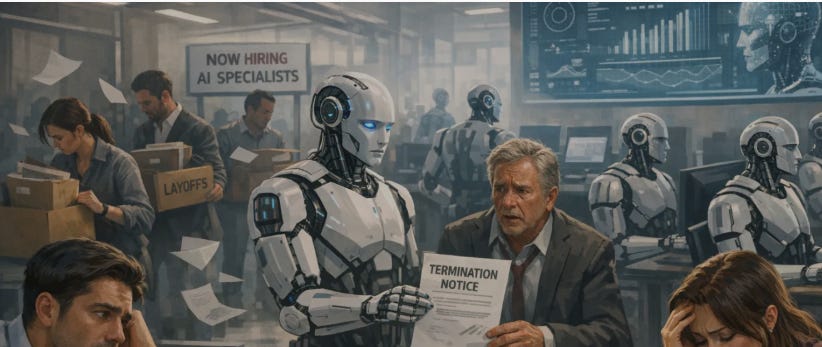
Fed Governor Lisa Cook warned the U.S. central bank may not be able to counter rising unemployment driven by the adoption of artificial intelligence. “Our normal demand-side monetary policy may not be able to ameliorate an AI-caused unemployment spell without also increasing inflationary pressures,” Cook said.
Boston Fed President Susan Collins said interest rates are likely to stay unchanged “for some time” as recent economic data shows improvement in the labor market while risks to inflation remain. Collins noted the Fed is “mildly restrictive, quite close to neutral” and said a “patient, deliberate approach is appropriate”. She emphasized the need for “more confidence that disinflation resumes”.
Chicago Fed President Austan Goolsbee said the central bank should avoid moving too quickly while price pressures remain sticky and the economy continues to expand, arguing that “stalling out at 3% is not a safe place to be” (57). With core inflation hovering near 3% and unemployment steady, the case for patience remains strong.
Richmond Fed President Thomas Barkin said he would like to see disinflationary forces in the data and noted that across the economy, “you are seeing disinflation but want more confirmation in data.”
A Harvard-led study found that AI can predict 71% of active-fund trades, with a machine-learning algorithm called a neural network able to learn patterns that much of what active fund managers do follows.
‘Boaz Weinstein Warns ‘Wheels Coming Off’ Private Credit Funds’ (bbrg)
‘Private Credit Fears Deepen With UBS Warning of 15% Defaults’ (bbrg)
UBS strategists say private credit could see default rates surge as high as 15% if artificial intelligence triggers an “aggressive” disruption among corporate borrowers.
Direct lenders that financed software companies are exposed to AI’s impact, with some estimates suggesting 40% of all sponsor-backed loans are tied up in the software industry.
Warnings about the $1.8 trillion industry have been building, with some comparing it to the 2008 financial crisis and others arguing the gloom is overdone.
‘Dan Loeb Says ‘Lost Art of Short Selling’ Is Making a Comeback’ (bbrg)
Moody’s alert cites gap in data centre accounting for Big Tech companies. ’ (FT)
“Scientists may have found the holy grail of quantum computing” (Science Daily)